

Nanobubbles: Technology that transforms industries with invisible yet powerful solutions
What are Nanobubbles?
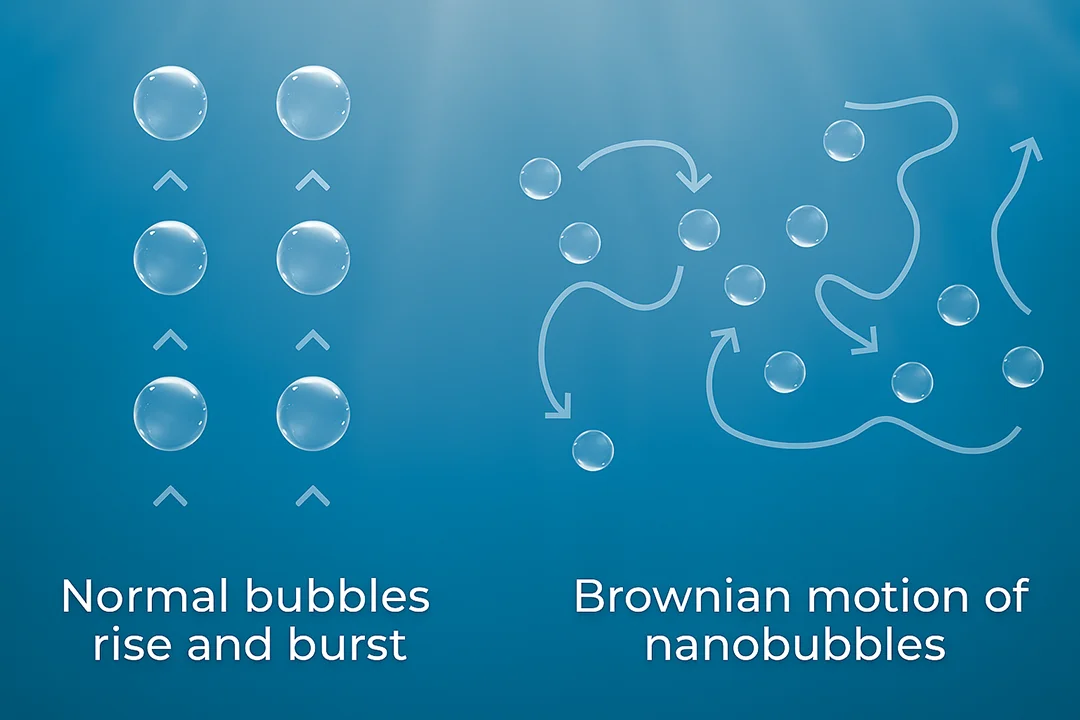
Nanobubbles are extremely small gas bubbles—on the order of nanometres (10⁻⁹ m), similar in size to a virus—that remain suspended in water for long periods. Unlike larger bubbles, they don’t “rise and burst” quickly: they disperse evenly, maintaining a constant gas supply throughout the liquid. Imagine water “charged” with billions of tiny gas reservoirs, ready to act whenever and wherever needed.
Physical and chemical characteristics of nanobubbles
- Submicrometric Size (10⁻⁹ m):
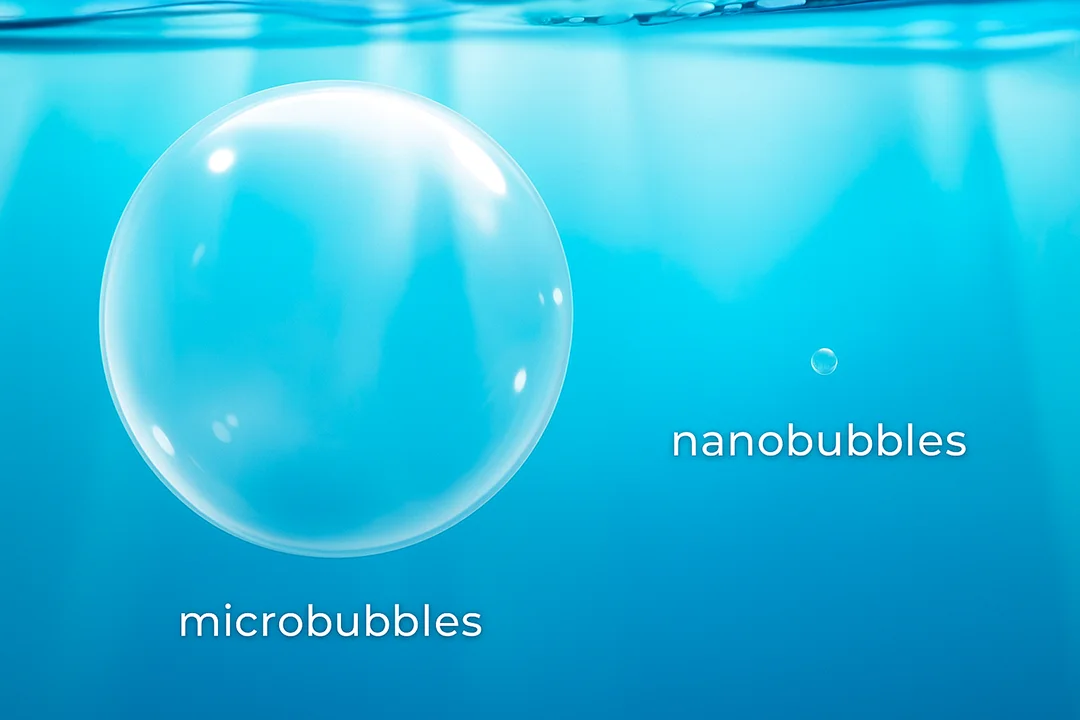
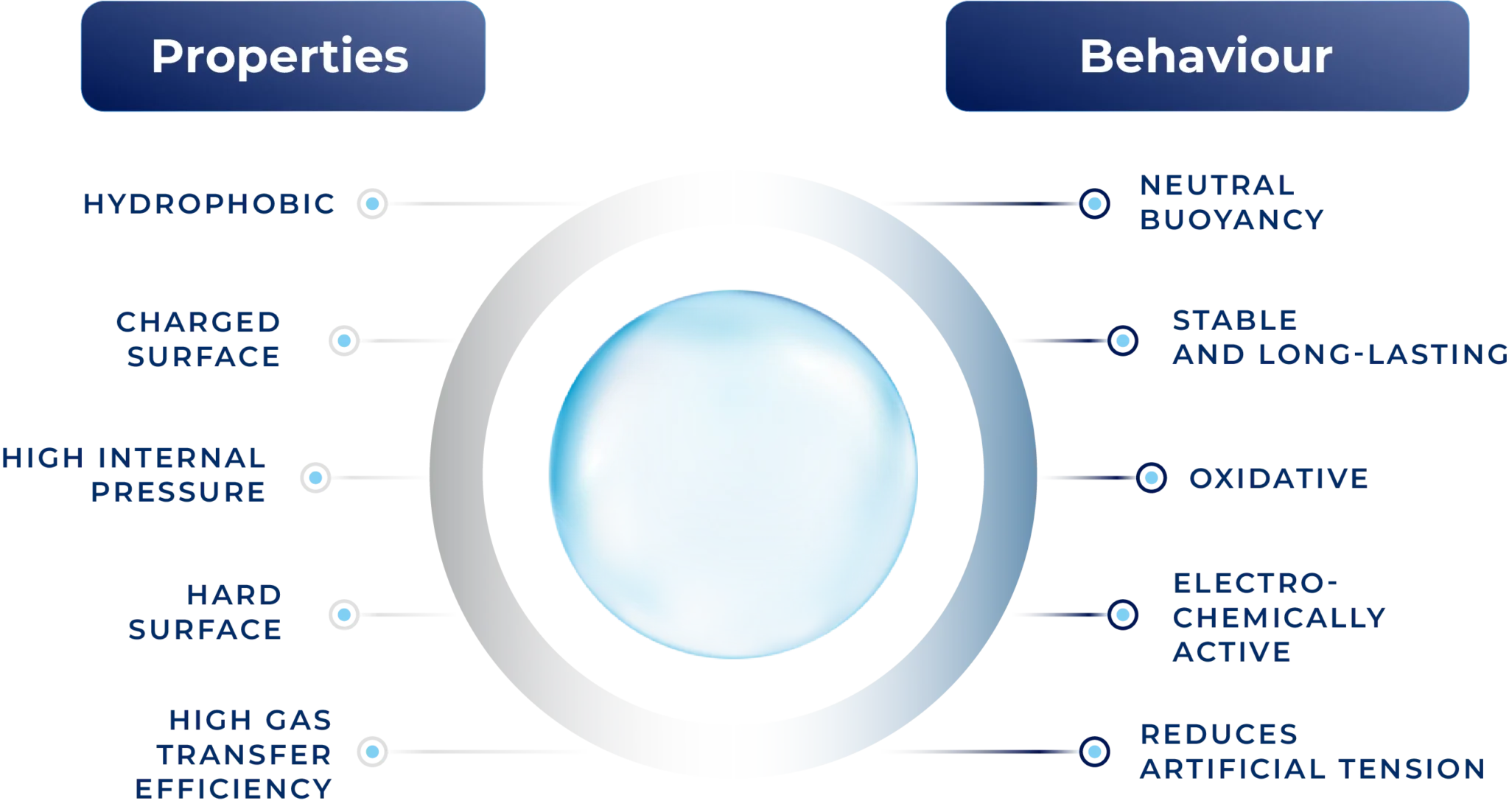
Nanobubbles typically measure tens to hundreds of nanometres. This tiny size increases the gas-liquid contact surface, boosting processes like oxygenation or gentle water oxidation.
- Surface charge and suspension behaviour:
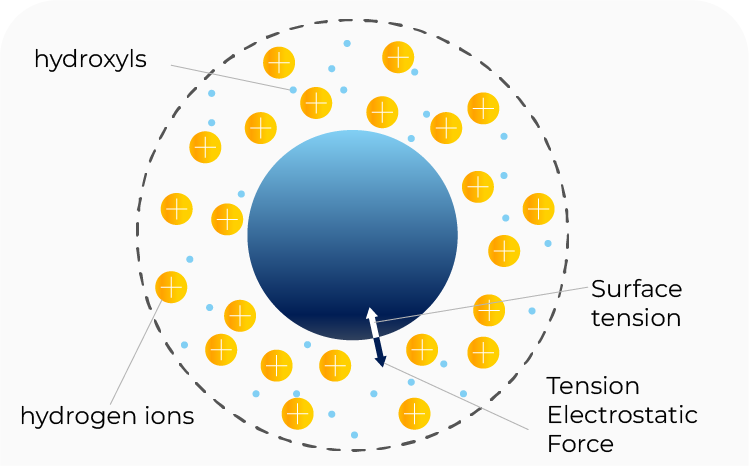
They exhibit a surface (zeta) charge that enhances their stability and electrochemical interaction. With near-neutral buoyancy, they stay suspended and spread uniformly.
- Longevity and stability in liquid:
Their nanometric size, surface tension and charge allow them to last from hours to weeks, offering beneficial effects long after being injected.
- High gas transfer capacity:
Nanobubbles dramatically increase gas-liquid transfer efficiency, producing water with high levels of dissolved oxygen and improved gas availability for biological and physico-chemical processes.
Uniform O2 Distribution
Unlike dissolved oxygen, the key feature is neutral buoyancy, allowing virtually perfect gas transfer.
Offers up to 85% oxygen transfer rate, while traditional aeration achieves just 1%-3% per foot.
Capable of remaining suspended in water for months.
Vertical and lateral distribution for greater efficiency.
Chemical-Free Oxidation
Bubble compression generates an oxidation effect, leading to the production of free radicals (measured as ROS, Reactive Oxygen Species).
This oxidative capacity effectively breaks down cells, such as those of algae, biofilms, and other bacteria, also inactivating toxins present in the medium.
Surface distribution and efficiency
On a 100 nm surface area, there’s a 2000-fold advantage over conventional bubbles.
This massive increase in surface area, together with the hallmark negative charge, provides:
Greater efficiency in the use of chemical agents.
Considerable energy savings.
Potentially higher material recovery.
Compared to conventional aeration (diffusers/venturis) or chemical treatments
Nanosud’s nanobubble technology provides more efficient, sustained oxygenation, along with added cleaning effects and stable water quality.
General benefits of nanobubble technology
- Better oxygenation: Raises and maintains dissolved oxygen throughout the water, supporting roots and aerobic microbiology (in agriculture) and healthy biomass (in aquaculture).
- Reduced use of aggressive chemicals: Lowers the need for chlorine, peroxides or other disinfectants by providing gentle, continuous oxidation.
- Efficient cleaning and biofilm removal:Helps detach and prevent biofilm and algae in pipes, ponds and equipment.
- Sustainability and reduced energy use: Fewer chemicals and improved transfer efficiency mean a lower environmental footprint.
- Improved processes: Higher output and quality, operational stability and fewer maintenance shutdowns.
Industrial applications (quick view)
- Agriculture: Hyper-oxygenated irrigation, improved root health, uniform crops, lower biofilm, and better water infiltration.
- Aquaculture: More oxygenated, cleaner water reduces pathogens, supports nitrification, ensures better survival and growth.
- Water treatment: Higher oxygen transfer and on-site oxidation reduce BOD/COD, H₂S and odours, with less chemical use.
- Minig: Supports processes such as flotation and leaching, as well as improved process water quality.
- Food industry: Clearer, more stable process water, less biofouling, and enhanced cleaning processes.
- Health and wellbeing: Improvements for livestock drinking water and emerging applications linked to water quality.
Nanosud nanobubble technology advantages
Nanosud’s nanobubble generation—Dutch-origin and globally validated—stands out for its efficiency, durability and ease of integration. In practice, this means:
- Superior gas transfer efficiency and controlled water supersaturation for stable, measurable processes.
- Stability and longevity of nanobubbles extend the effects beyond the injection point.
- Simple “plug-in” integration into irrigation lines, ponds, reactors or process systems—no redesign needed.
- Cleaner operation: less biofilm and reduced use of aggressive chemicals—cost and safety benefits.
- Proven scalability in multiple industries, with technical support and experience from various countries.
Basics of Nanobubbles
Nanobubbles of 100 nanometres have unique properties and behaviours.
Nanosud
Technology
Tiny nanobubbles—just 1/2000th the size of a salt grain—remarkably enhance water quality and optimise industrial processes, using aeration, flotation and oxidation techniques.
Want to assess its potential for your operation?
Nanosud Applications
We apply nanobubble technology wherever water is critical. Select your industry and discover real benefits.